
What Is the Best Wordle Starting Word?
There is no single starting word that is best for every Wordle player or every solving method. CRANE, SLATE, TRACE, RAISE, and STARE are useful balanced openers because each tests five different letters, including common vowels and consonants. ADIEU and AUDIO are alternatives for players who want to test several vowels early, but they provide less consonant information. The best choice depends on whether you value balanced coverage, vowel discovery, or a familiar word you can use consistently.
Why Your First Guess Matters
Your opening guess is a chance to collect information before the board provides any clues. A word containing five different letters can test five parts of the answer at once, while a repeated letter usually reduces the number of distinct letters checked. Common letters can be useful because they occur in many English words, but letter frequency alone does not guarantee a quick solve.
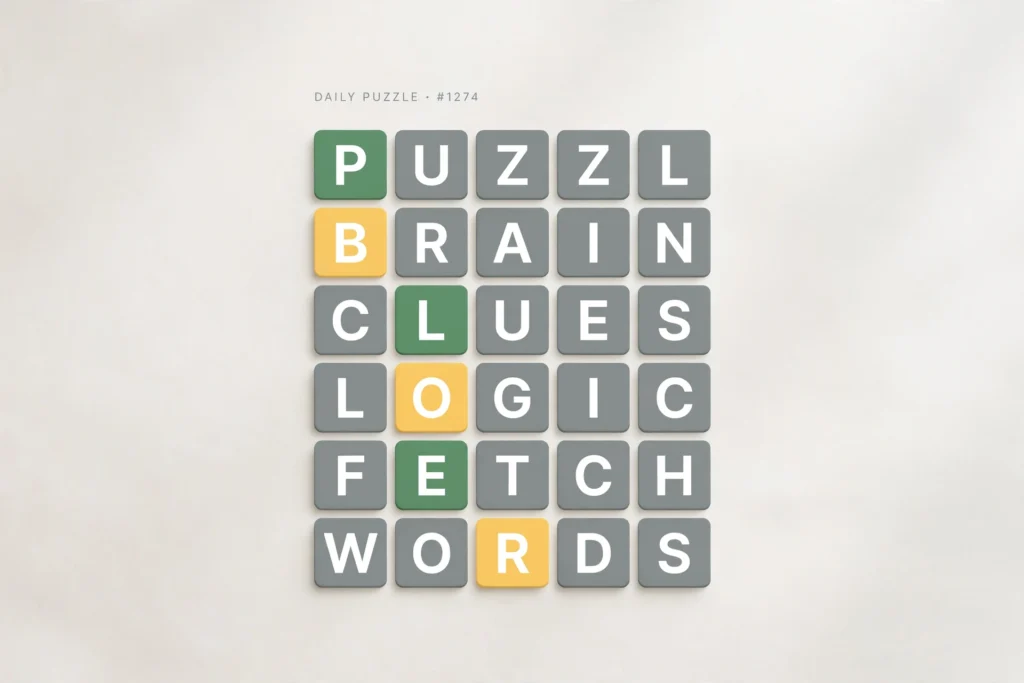
The color feedback is just as important as the word you choose. A green tile means the letter is correct and in the right position. A yellow tile means the letter appears in the answer but belongs somewhere else. A gray tile usually means the letter is absent, although duplicate-letter situations can make the feedback less straightforward. Use all the clues together rather than judging an opener only by how many colored tiles it produces.
How to Choose a Strong Wordle Opener
A practical starting word usually has five distinct letters, includes one or more common vowels, and tests useful consonants. Many balanced openers contain two vowels and three consonants, but that is a guideline rather than a strict rule. Vowel-heavy words can quickly identify which vowels may be present, while consonant-rich words can help distinguish between likely answers.
It is also important to separate letter coverage from solving performance. A word may test several frequent letters but still leave many possible answers. To prove that one opener is mathematically superior, you would need to test it against a defined answer list and a consistent solving method. This guide offers practical choices, not a claim that the words below have been independently benchmarked or that their order represents a measured win rate.
Compare the Best Wordle Starting Words
| Starting word | Vowels | Consonants | Main strength | Best suited for |
|---|---|---|---|---|
| CRANE | A, E (2) | C, R, N (3) | Balanced coverage of common letters | A dependable everyday opener |
| SLATE | A, E (2) | S, L, T (3) | Balanced coverage with S, L and T | Players who want a familiar word |
| TRACE | A, E (2) | T, R, C (3) | Tests several common consonants | Players who want C in their opener |
| RAISE | A, I, E (3) | R, S (2) | More vowel coverage while testing R and S | Players who prefer a vowel-leaning mix |
| STARE | A, E (2) | S, T, R (3) | A balanced mix of useful letters | An alternative to CRANE or SLATE |
| ROATE | O, A, E (3) | R, T (2) | High-frequency-letter coverage | Players comfortable with a less familiar word |
| ADIEU | A, I, E, U (4) | D (1) | Tests four vowels at once | Vowel-first players |
| AUDIO | A, U, I, O (4) | D (1) | Broad vowel check | Players who want to identify vowels early |
| ARISE | A, I, E (3) | R, S (2) | Vowel coverage plus R and S | A familiar vowel-forward option |
| NOTES | O, E (2) | N, T, S (3) | Different mix of common letters | Players wanting an alternative pattern |
| LEAST | E, A (2) | L, S, T (3) | Balanced letter coverage | Players who like a straightforward opener |
| IRATE | I, A, E (3) | R, T (2) | Three vowels and two common consonants | Players who favor early vowel clues |
This table compares each word’s letter mix, not a verified ranking by average guesses or win rate. Different answer lists and follow-up strategies can change which opener performs best.
1. CRANE: A Balanced Everyday Choice
CRANE tests C, R, A, N, and E without repeating a letter. It includes two vowels and three consonants, so the feedback can help you learn both which letters may be present and which ones to investigate next. It is a sensible default if you prefer one familiar opener rather than changing words every day. Still, no opener guarantees a green tile or a quick win; the next guess should respond to the actual colors on your board.
2. SLATE: Another Strong Balanced Option
SLATE tests S, L, A, T, and E. Its mix of vowels and consonants makes it useful for gathering broad information on the first move. Some players may prefer it to CRANE because they like testing S, L, and T together. Neither word is automatically best for every puzzle, so choose the one whose possible results you find easiest to work with on the second guess.
3. TRACE: Useful Consonant Coverage
TRACE includes T, R, A, C, and E, giving you a balanced mix and a chance to test C early. It is a practical option if you want a different set of consonants from SLATE. As with any opener, its value comes from how you interpret the feedback: avoid treating it as a fixed formula and use the revealed positions to narrow the possible answers.
4. RAISE: A Vowel-Leaning Alternative
RAISE checks R and S along with three vowels: A, I, and E. This can be helpful if your early strategy prioritizes discovering vowel information. The trade-off is that it tests fewer consonants than a two-vowel opener such as CRANE or SLATE. A useful first guess is not necessarily the one that produces the most yellows; it is the one whose feedback helps you make a better-informed next move.
5. STARE: A Familiar, Flexible Opener
STARE combines S, T, and R with A and E. It is easy to remember and offers a balanced set of distinct letters. If you rotate between openers for variety, it can be an alternative to CRANE or SLATE, though rotation itself does not guarantee better results. Consistent play with one word may help you learn how to respond to its common feedback patterns.
6. ROATE: High-Frequency Letters in One Guess
ROATE tests R, O, A, T, and E. Its three vowels and two consonants make it more vowel-heavy than CRANE or SLATE. It may appeal to players who want to test several common letters at once, but it is less familiar than some everyday words. Use it if you are comfortable entering it and have a clear plan for interpreting the result.
7. ADIEU: The Vowel-First Strategy
ADIEU tests A, D, I, E, and U, including four vowels. That can quickly show which of those vowels may be in the answer, but it checks only one consonant. If the result leaves you with little consonant information, your next guess should aim to test useful consonants while respecting every green and yellow clue. ADIEU is therefore a particular strategy choice, not a universal winner.
8. AUDIO: Another Way to Check Vowels
AUDIO also tests four vowels, along with D. Its main appeal is the chance to identify vowel information early. However, a vowel-heavy opener leaves more consonants untested, and knowing which vowels are absent may not identify the answer by itself. If you choose AUDIO, make your next move count by using a word that tests new consonants and fits any positional clues already revealed.
Other Options: ARISE, NOTES, LEAST, and IRATE
ARISE and IRATE lean toward vowel coverage while still testing useful consonants. NOTES and LEAST provide a more balanced distribution of vowels and consonants. These words can be reasonable alternatives if you prefer a different pattern or simply find one easier to remember. The key is not to assume that a particular opener is proven superior without comparable testing. Five distinct letters and a thoughtful follow-up are a solid starting point for a practical strategy.
Starting Words and Habits to Avoid
A first guess with repeated letters usually tests fewer than five distinct letters. That can be a disadvantage when your goal is broad initial coverage, although repeated letters can become useful later when the clues suggest a duplicate. Words built around very uncommon letters may also provide less useful information in many puzzles, but an uncommon letter is not automatically a bad choice if other clues make it relevant.
Do not choose a word just because it looks clever or contains many vowels. A word that tests four vowels provides little consonant information, while a consonant-heavy word may leave you unsure about vowels. Also, do not assume every word ending in S is a plural answer; the important question is whether the word is a valid guess and whether its letters provide useful information. Choose a valid word you can spell confidently and interpret its feedback carefully.
What to Do After Your First Guess
Your second guess should be based on the board, not on a memorized sequence that ignores the clues. Keep green letters in their exact positions. Keep yellow letters in the answer but move them to different positions. Avoid reusing gray letters unless you have a specific reason, such as investigating a possible repeated letter. Remember that Wordle feedback can be more complicated when a guess contains duplicate letters, so do not automatically conclude that every instance of a gray letter is absent if another instance was marked green or yellow.
A Practical Example
Imagine your opening guess is CRANE. Suppose C and R are gray, A is yellow, N is gray, and E is green. This hypothetical result tells you that E belongs in the fifth position, A is in the answer but not the third position, and C, R, and N are not indicated as answer letters. Your next guess should keep E at the end, move A to a different position, and test new consonants. The exact second word depends on the remaining valid possibilities; do not use an example word if it conflicts with the colors on your actual board.
When an Eliminator Guess Helps
Sometimes several answers still fit your clues. In that situation, a guess can be useful even if you do not expect it to be the answer, provided the game permits the guess and it helps distinguish between candidates. For example, if the remaining options differ mainly in their first consonant, testing a word that checks those consonants may help you decide. In ordinary mode, this information-gathering approach can be useful; in Hard Mode, every revealed hint must be used in subsequent guesses, so an eliminator must obey those restrictions.
If you get stuck, a spoiler-safe Wordle hint can offer a nudge without immediately revealing the solution. You can also explore the site’s guides to Wordle clues, Wordle cheats and solving tips, and today’s Wordle answer if you choose to reveal it.
Wordle Starting Words in Hard Mode
Hard Mode changes how you can use later guesses: once you reveal a green or yellow letter, subsequent guesses must follow the game’s hint restrictions. That makes flexibility important. CRANE, SLATE, TRACE, and RAISE can all be reasonable choices, but no opener removes the need to think through the next move. Before submitting a guess, check that it follows every required clue and does not put a yellow letter back in a position where it has already been ruled out.
Avoid relying on a rigid second word if the first guess produces unexpected feedback. A pre-planned follow-up can be helpful in some situations, but it must still fit the actual board. In Hard Mode especially, use the information you have rather than forcing a favorite sequence that no longer makes sense.
Should You Use One Starting Word or Rotate?
Using one opener regularly can make your routine easier to remember and help you learn how to respond to its common outcomes. Rotating between two or three good options is also fine if you enjoy variety. Neither approach guarantees a higher win rate. If your goal is to improve, pay more attention to how accurately you interpret the colors and how effectively you narrow the answer list than to changing your opener after one disappointing game.
You can also track your own results for a few weeks. Record the opener, how many letters were identified, and how many guesses you needed to solve the puzzle. This is not a controlled scientific test, but it can help you see which word works best with your habits. For a meaningful comparison, use the same rules and a similar period for each opener rather than drawing conclusions from just one or two games.
Frequently Asked Questions
What is the single best Wordle starting word?
There is no universally best word for every player and every solving method. CRANE, SLATE, and TRACE offer balanced coverage, while ADIEU and AUDIO prioritize vowels. Choose an opener you understand and use its feedback carefully.
Is ADIEU a good Wordle starter?
ADIEU can be useful if you want to test four vowels immediately. Its limitation is that it checks only one consonant, so you may need a follow-up that tests additional consonants while respecting any clues revealed by the first guess.
Should my starting word contain repeated letters?
Usually, a first guess with five unique letters gives broader coverage. Repeated letters can be useful later when clues suggest that the answer contains a duplicate, but they often provide less variety on the opening move.
Are CRANE and SLATE scientifically proven to be the best?
This article does not claim that either word has the highest measured solve rate. Proving that would require a defined answer list, a consistent solving algorithm, and comparable tests. Both are practical balanced options, not guaranteed winners.
Where can I get a daily Wordle hint?
Visit Wordle Hint Hub for spoiler-conscious help. Use a hint to narrow the possibilities before deciding whether you want to reveal the answer.
Accuracy, Originality, and Google’s Guidance on AI-Assisted Content
Google explains that generative AI can help with research and organizing original content, but publishing many pages that add little value for readers may violate its scaled content abuse policy. The important standard is not whether a writing tool was used; it is whether the finished page is accurate, useful, relevant, and created with readers in mind. AI-generated material can contain errors, so factual claims should be checked before publication rather than accepted automatically.
For this Wordle guide, the starting-word table compares letter coverage and intended use—not independently verified win rates. That distinction matters: claims about which opener is “best” should not be presented as proven results unless they are supported by transparent testing. The same care should be applied to the page title, meta description, structured data, and image alt text. If automation played a meaningful role in creating or updating a page, publishers can also provide appropriate context for readers when it helps them understand how the content was produced.
Google’s guidance does not promise first-page rankings, and its Search Quality Rater Guidelines are used to evaluate search-result quality rather than directly determine a page’s ranking. The practical approach is to review content for accuracy, add original value, avoid repetitive low-value pages, and make sure every section genuinely helps the reader.
Final Thoughts
The best Wordle starting word is one that gives you useful information and fits the way you solve puzzles. CRANE, SLATE, TRACE, STARE, and RAISE are balanced choices; ADIEU and AUDIO are better suited to a vowel-first approach. Treat any ranking as a guide rather than a guarantee, because the answer list and your follow-up decisions affect performance. Start with five distinct letters when possible, read every color carefully, and let the board—not habit alone—determine your next guess.
Pingback: 5 Letter Words for Wordle: Best Lists to Boost Your Game - Wordle Hint Hub
Pingback: Wordle Clue: How to Read and Use Clues Without Spoiling the Answer - Wordle Hint Hub
Pingback: How to Keep Your Wordle Streak Alive - Wordle Hint Hub